
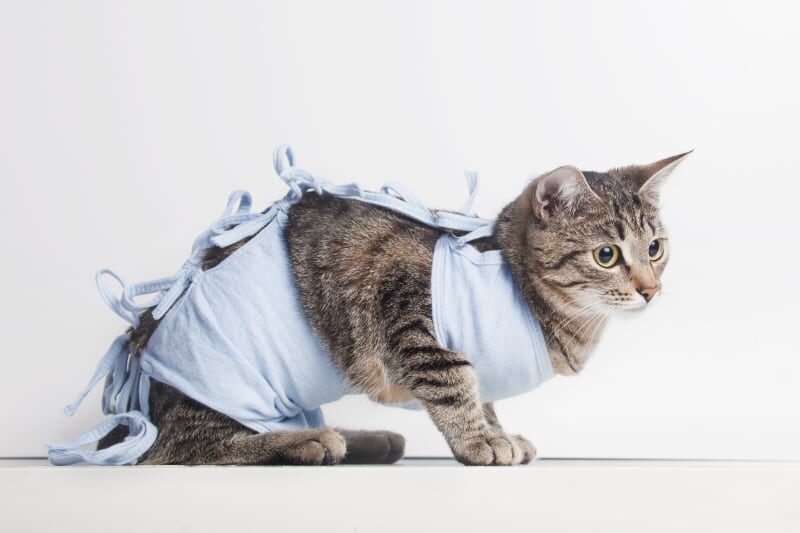
A collaborative team of scientists from UC Davis and UC San Francisco completed the first clinical trial of a new cancer drug in cats, offering hope for a disease that has long been nearly impossible to treat. The study, published in Cancer Cell, found 35 percent of the cats with squamous cell carcinoma who received treatment had their disease controlled with minimal side effects. Researchers say the drug will likely be effective for humans with head and neck squamous cell carcinoma.

for cats with squamous cell carcinoma. He survived more
than eight months after taking part in the clinical trial.
Photo: Tina Thomas
Oral squamous cell carcinoma is one of the most aggressive cancers in feline patients. Most cats survive only two to three months after diagnosis, since surgery, chemotherapy and radiation usually do little to stop it. The drug, which was originally designed to treat human head and neck cancers, is the first of its kind to target a protein called STAT3. This protein acts like a faulty switch that tells cancer cells to keep growing.
“What’s exciting is that this study shows it’s possible to shut down a protein that drives cancer,” said first author Daniel Johnson with the UCSF Helen Diller Family Comprehensive Cancer Center. “That has been notoriously difficult in the past.”
He added that the study also shows that pets with cancer can be good models of human disease and they may yield more reliable results than mouse models. Researchers are currently working with a small biotech company to advance the new compound in clinical trials for both pets and humans.
This work was supported by the National Institutes of Health and the school’s Center for Companion Animal Health.