
How to Set Up a Safe Outdoor Cat Shelter
Providing a safe, weather-resistant outdoor shelter can literally save the life of a community cat or feral kitten during extreme weather, whether it is freezing winter nights or blistering summer heat. Feral and outdoor cats need a dry, wind-proof, and insulated space to regulate their body temperature when they cannot find indoor accommodation.
The best part? You don’t need a massive budget or advanced carpentry skills to build a reliable shelter. Here is how to make a secure, comfortable outdoor haven using simple, affordable materials.
Step 1: Choose the Right Materials
When building an outdoor shelter, material choice is critical.
- Use Plastic Storage Bins: Heavy-duty plastic storage totes (like Rubbermaid or similar waterproof tubs) make ideal outer shells because they are inexpensive, completely waterproof, and easy to clean.
- Avoid Blankets, Towels, or Hay: Never use fabric blankets, towels, or cotton clothing inside an outdoor shelter. Cats sweat through their paw pads, and any moisture from their bodies or the air will cause cotton or fleece to absorb dampness, freeze, or become a breeding ground for mold and bacteria, pulling body heat away from the cat.
- Always Use Straw, Not Hay: Straw is hollow and repels moisture, allowing cats to burrow and use their own body heat to stay warm. Hay is meant for livestock feed, absorbs moisture easily, and can rot or attract parasites.
Step 2: Prep and Insulate the Shelter
- Line the Interior: Line the inside walls, floor, and ceiling of your plastic bin with sheets of rigid foam insulation board (available at any hardware store). Tape the edges securely with waterproof tape.
- Add the Straw Layer: Pack a generous layer of clean straw on top of the insulated floor. Give the cat enough loose straw so they can burrow down into it like a nest.
Step 3: Cut the Doorway Correctly
The entrance needs to be carefully sized to keep out larger predators and harsh wind.
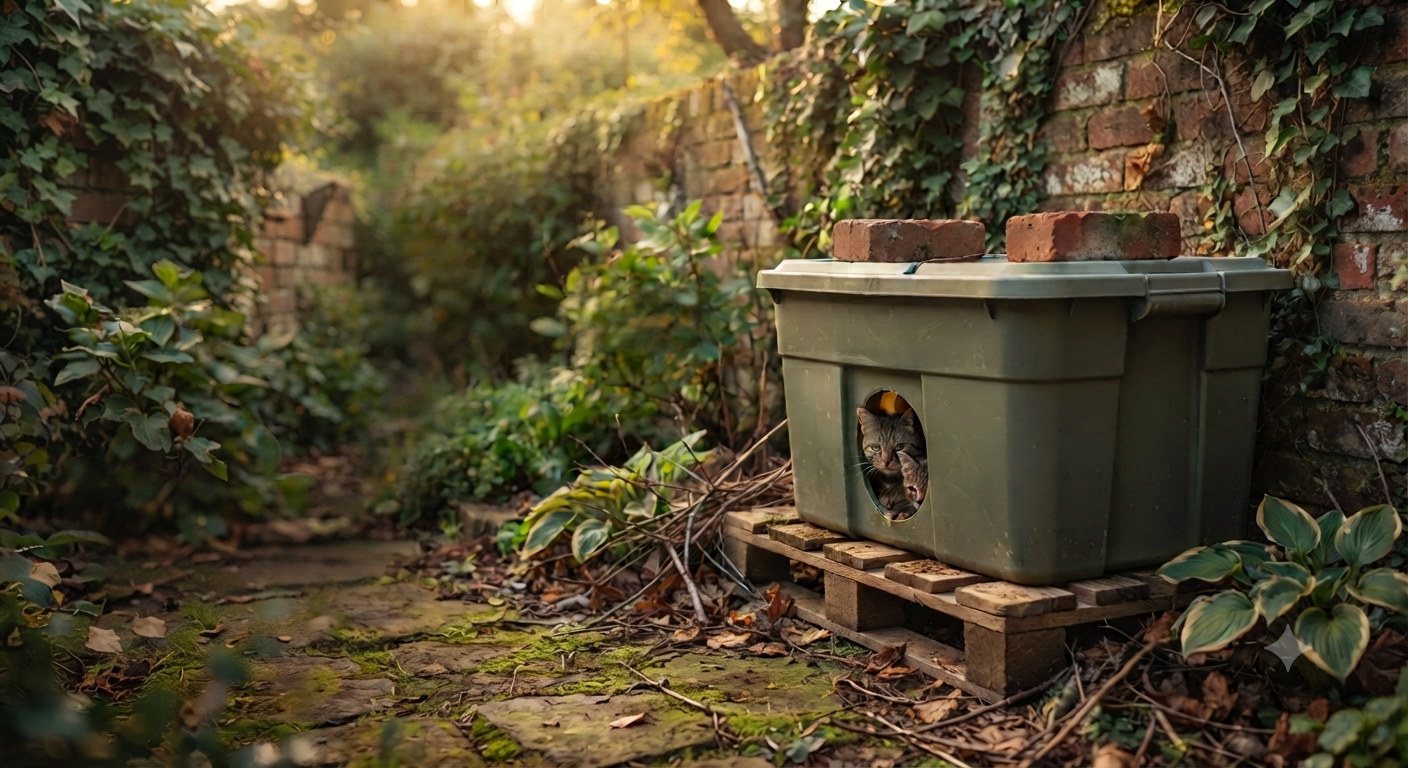
- Keep It Small: Cut a hole roughly 6 inches by 6 inches, placed a few inches above the bottom of the bin so straw doesn’t spill out and rain doesn’t pool inside. A small hole is plenty big enough for a cat, but keeps dogs, raccoons, and foxes out.
- Add a Flap: Tape a heavy plastic flap (like a piece of a heavy-duty trash bag or clear vinyl) over the inside or outside of the doorway to block wind and retain body heat.
- Pro Tip – Two Doors: If possible, consider cutting two small doors on opposite sides of the shelter. This gives cats an escape route if an aggressive animal traps them inside.
Step 4: Weatherproof and Secure the Placement
- Lock Down the Roof: Ensure the lid clicks tightly onto the plastic tote. Because outdoor winds can blow lightweight bins around, weigh down the roof using a heavy brick or stone placed securely on top.
- Elevate the Base: Never place the shelter directly on bare, cold, or wet ground. Set it up on wooden pallets, bricks, or concrete blocks to keep moisture from seeping up through the bottom.
- Choose a Hidden Location: Place the shelter in a quiet, discreet spot out of high-traffic human areas and strong winds—such as behind bushes, near a wall, or under a porch—so the cats feel safe and secure while resting.