
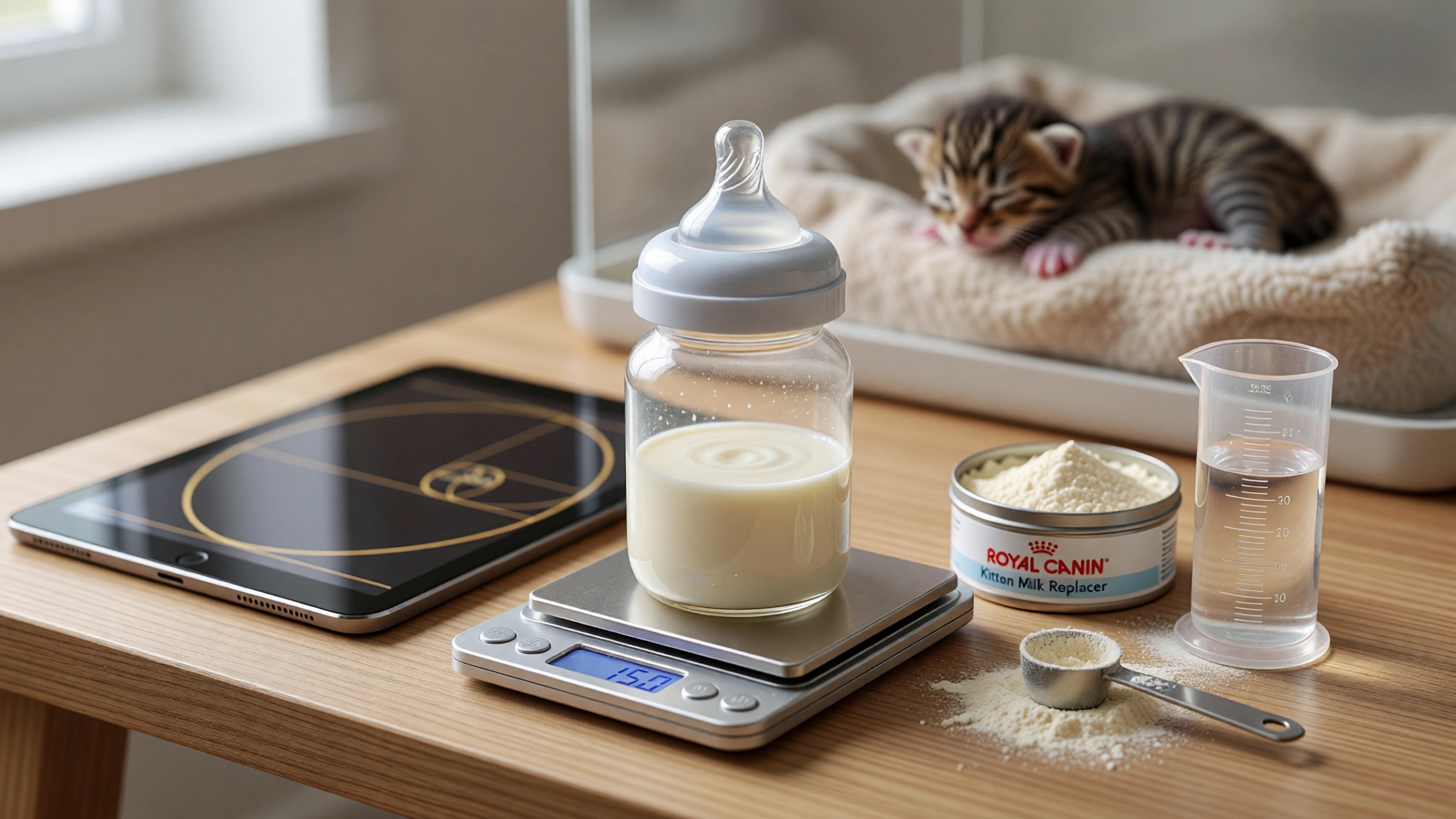
Raising a neonatal kitten is one of the most rewarding rescue experiences, but it starts with a very delicate science: feeding. When a kitten is orphaned at just a few days old, they cannot process cow’s milk or makeshift recipes. They rely entirely on a specialized formula to give them the nutrients, hydration, and immune support they need to survive.
Getting the bottle right is the first step to keeping your tiny foster healthy, gaining weight, and growing strong.
1. Choose High-Quality Kitten Milk Replacer (KMR)
Not all formulas are created equal. When it comes to fragile neonates, investing in a premium formula—such as Royal Canin Babycat Milk—makes a dramatic difference.
- Why Quality Matters: Premium formulas are carefully balanced to mimic natural mother’s milk closely, providing the correct balance of proteins, fats, and essential amino acids.
- Better Digestion: Cheap formulas or sudden switches can lead to severe diarrhea, dehydration, and bloating, which can quickly become life-threatening in tiny kittens.
2. The Mixing Rules: Avoiding Clumps and Toxin Traps
Mixing formula isn’t just about dumping powder into water; precision is key.
- Water Temperature: Use boiled or distilled water that has cooled down to lukewarm. Water that is too hot will destroy essential nutrients, while cold water won’t dissolve the powder properly.
- The Mixing Ratio: Always follow the instructions on your specific formula container precisely. Too much powder causes severe constipation and dehydration; too little leaves the kitten malnourished and constantly hungry.
- Mix and Strain: Whisk the powder thoroughly so there are no lumps. Clumps can clog the nipple and cause a kitten to aspirate formula into their lungs.
3. Temperature Check Before Feeding
A kitten should never be fed cold formula. Cold food lowers their core body temperature, leading to digestion failure and fading.
- The Wrist Test: Warm the prepared bottle in a bowl of warm water. Test a few drops on the inside of your wrist—it should feel lukewarm (like baby skin), never hot.
4. Choosing the Right Nipple and Position
- The Miracle Nipple: Standard pet store bottles often come with stiff nipples that can frustrate a kitten or flood their mouth. Many rescuers swear by the soft, realistic texture of the Miracle Nipple, which mimics a mother’s teat.
- Belly Down: Never feed a kitten on its back like a human baby. Always feed them with their belly flat on a soft towel or blanket, head upright. Feeding on their back creates a high risk of fluid entering their lungs.