
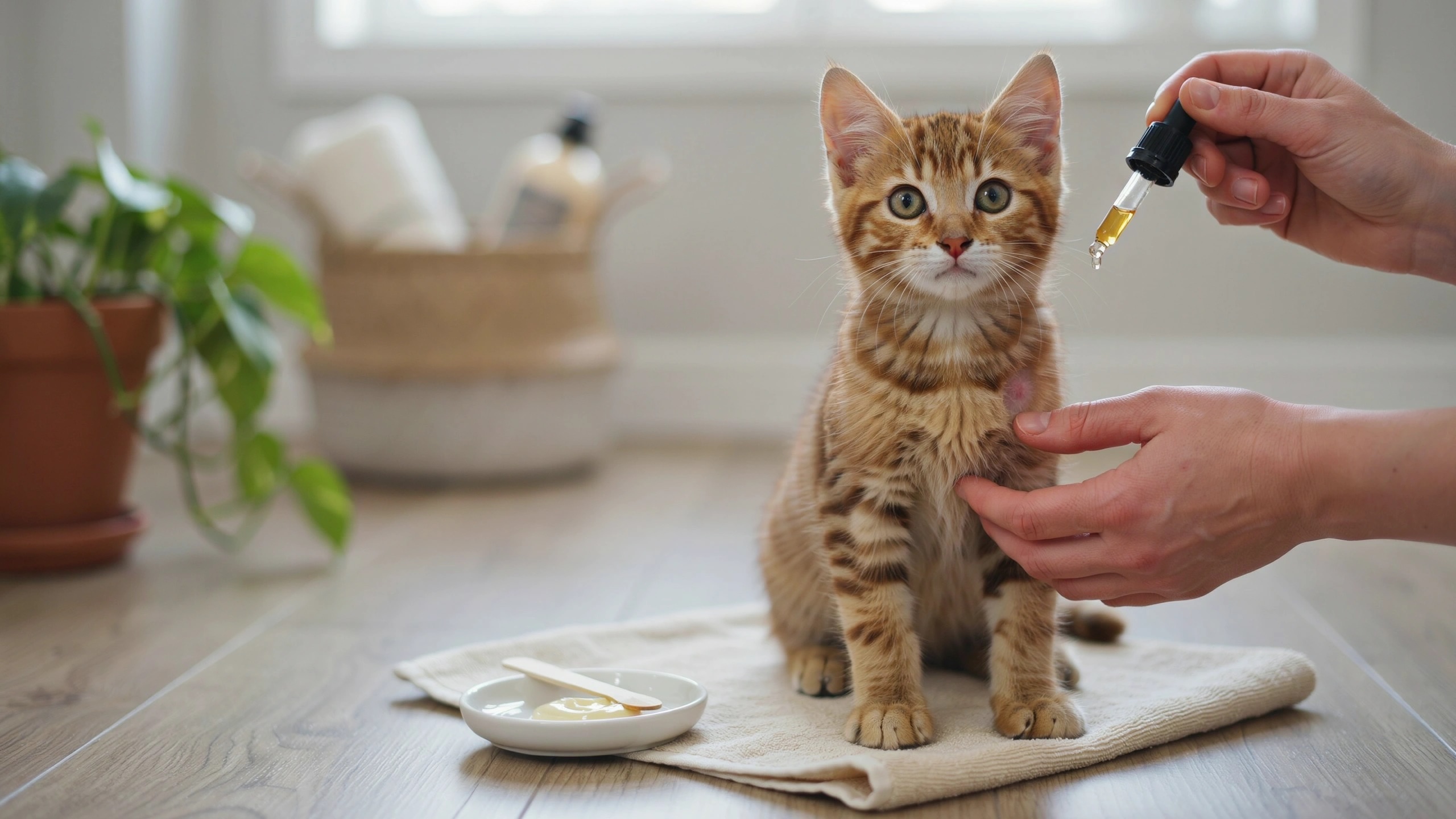
Ringworm is one of the most common fungal skin infections encountered in rescue work. Despite its name, it has nothing to do with worms. It is actually a dermatophyte infection caused by fungi that feed on the keratin found in a kitten’s skin, hair, and claws. Because kittens have developing immune systems, they are particularly vulnerable to catching and spreading this stubborn infection.
Recognizing the signs early and using the right approach is essential to clearing it safely without harming a kitten’s fragile body.
Recognizing the Signs
Ringworm can present in various ways, making it a master of disguise. Keep an eye out for these common indicators:
- Circular Lesions: Classic bald patches that are often round, scaly, or crusty, frequently appearing on the face, ears, or paws.
- Brittle or Broken Hair: Hairs around the affected area may look stubbly, broken, or dusty.
- Itching and Inflammation: While adult cats might show mild irritation, kittens can experience localized redness and scratching that leads to secondary skin infections.
Diagnosis and Confirmation
Before starting any aggressive treatment, confirming the diagnosis is crucial.
- The Wood’s Lamp Examination: Many veterinarians and experienced rescuers use a specialized UV light, specifically a 365nm Wood’s lamp, to screen for ringworm. Certain strains of the fungus will fluoresce an apple-green color under this precise wavelength.
- Veterinary Confirmation: Because not all strains glow under UV light, a definitive diagnosis usually requires a veterinary fungal culture or PCR test.
Safe and Effective Treatment Protocols
Treating ringworm requires a multi-pronged approach that targets the fungus on the skin, prevents environmental contamination, and supports the kitten’s health.
- Topical Care: Medicated antifungal shampoos, dips, or targeted sprays (such as Funguu or vet-prescribed rinses) are frequently used to treat the surface infection. Always check the specific product label or follow your veterinarian’s exact instructions regarding application frequency. When using topical sprays on kittens, ensure they cannot lick the wet medication by using a temporary cone or supervising them until the product is fully dry. Avoid spraying near the eyes and nose by dabbing the liquid on with a cotton ball instead.
- Oral Medications: For widespread or stubborn infections, veterinarians may prescribe systemic antifungal medications like itraconazole. Itraconazole can be safe and effective for young kittens (such as those around 2 months of age), but it requires strict veterinary supervision and precise weight-based dosing. Because a kitten’s liver and kidneys are exceptionally sensitive, never administer systemic antifungals without direct professional guidance.
- Environmental Decontamination: The spores of the ringworm fungus can live in the environment for months. Wash all bedding, blankets, and towels in hot water daily, vacuum thoroughly, and use a vet-approved disinfectant to wipe down hard surfaces.
Protecting Other Pets and Humans
Ringworm is highly contagious and easily transferable between animals and humans (zoonotic). If you are treating an infected kitten, always wear gloves when handling them, wash your hands thoroughly after every contact, and keep the kitten quarantined in an easy-to-clean room (like a bathroom or dedicated recovery pen) until a veterinarian confirms they are clear.